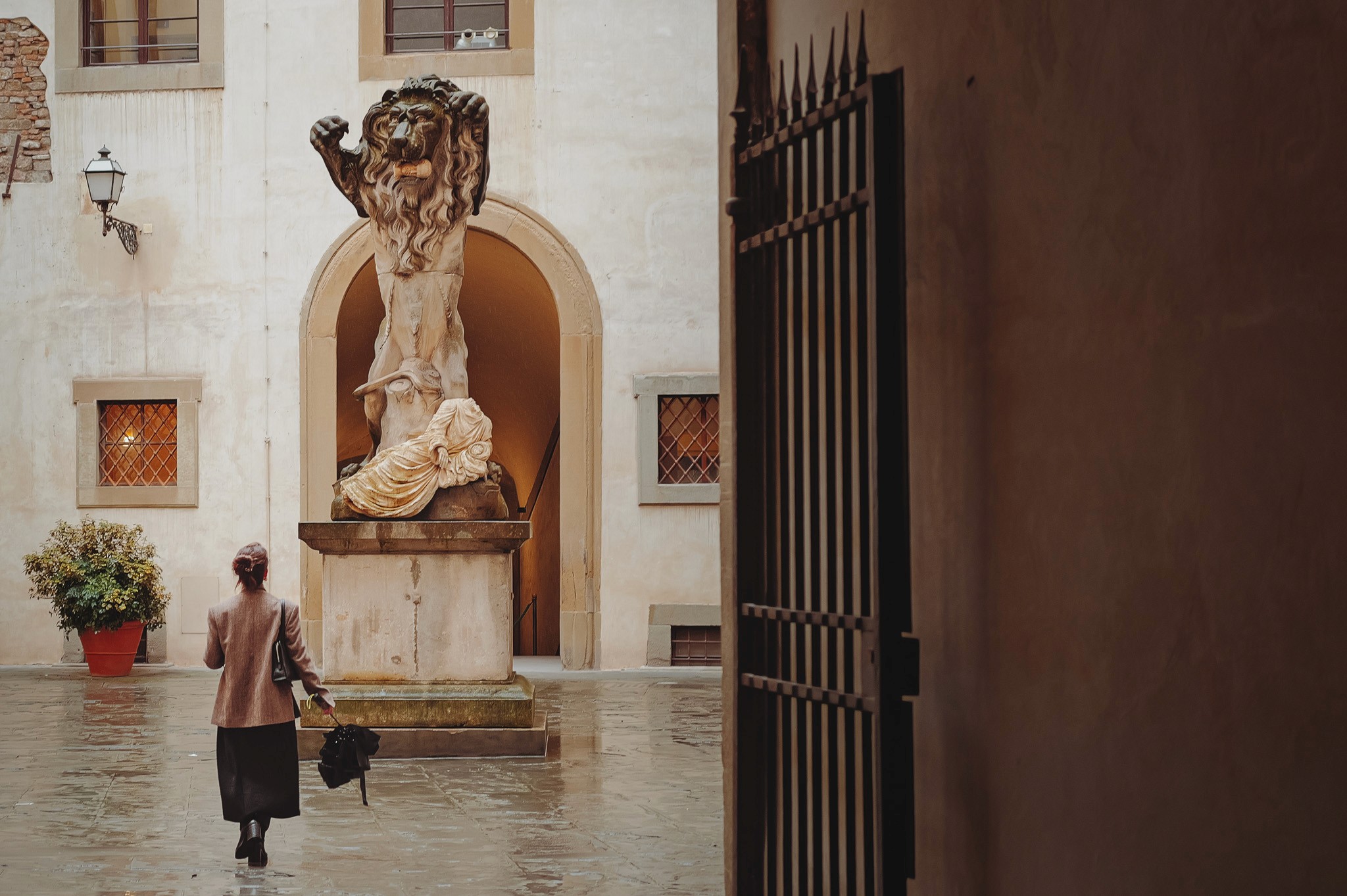
Florence : The City that refuses to be photographed
January 2025
10 Minutes
There is a particular frustration that comes with photographing a city that has already been seen too many times. Florence is perhaps the most exhaustively imaged city in the world — every corridor of the Uffizi, every angle of the Duomo's façade, every cobblestone along the Lungarno — captured, filtered, and fed back into the world in such volume that the city itself seems to exist now mainly as confirmation of what people already expected to find.
I arrived with no interest in confirming anything.
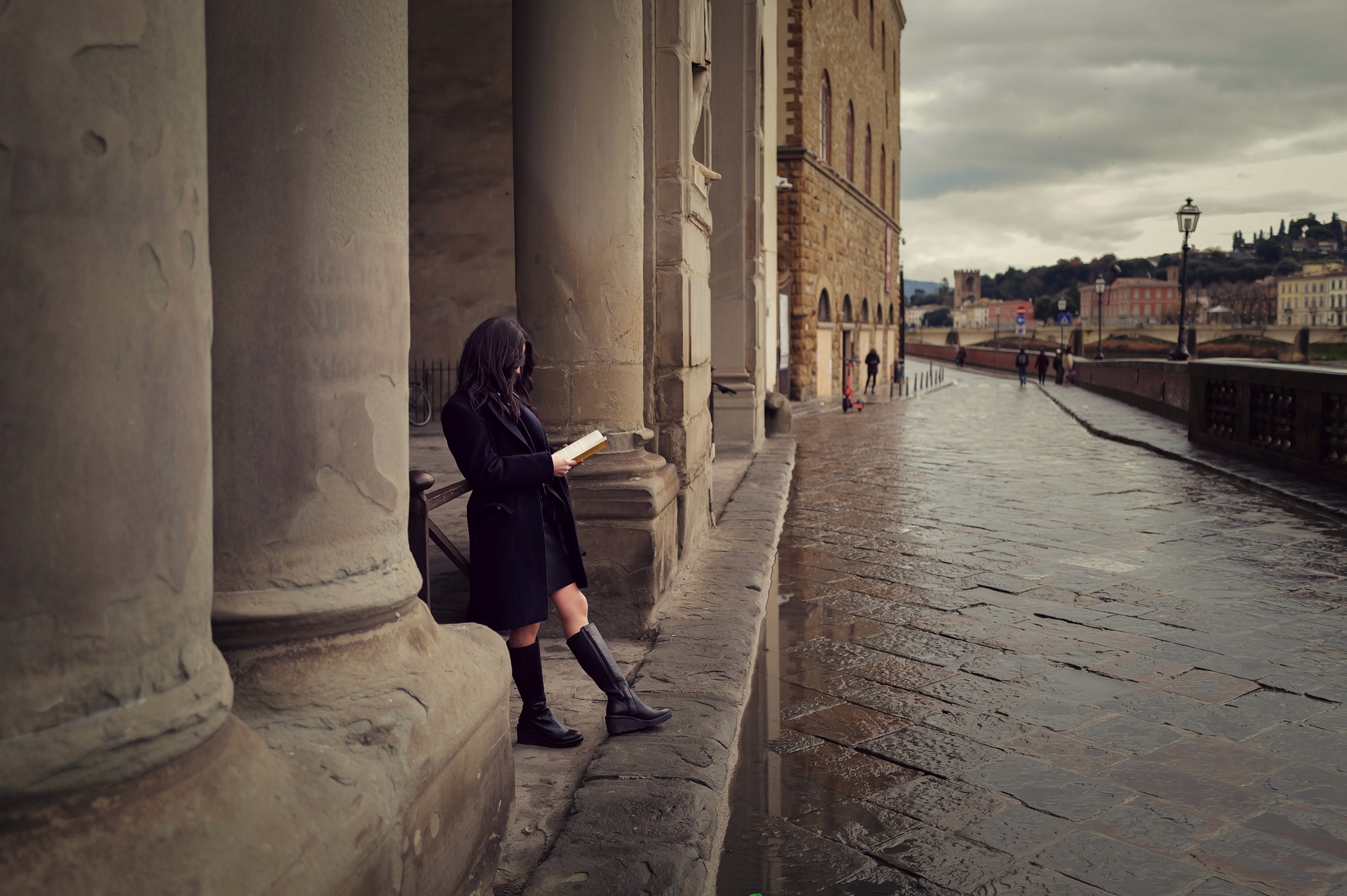
The rain helped. It arrived on the second morning and stayed for three days, stripping the piazzas of their tourist geometry and leaving behind a different city — slower, more interior, more itself. A woman in a black coat stood against the columns of the Palazzo Pitti, reading. The wet stone made the scene almost monochrome. She didn't look up. Whatever she was reading, it was more pressing than the Arno visible at the end of the street, more pressing than a photographer passing slowly with a camera. That kind of absorbed indifference — the private life continuing in full view — is what I came looking for, and rarely find. That morning, I found it.
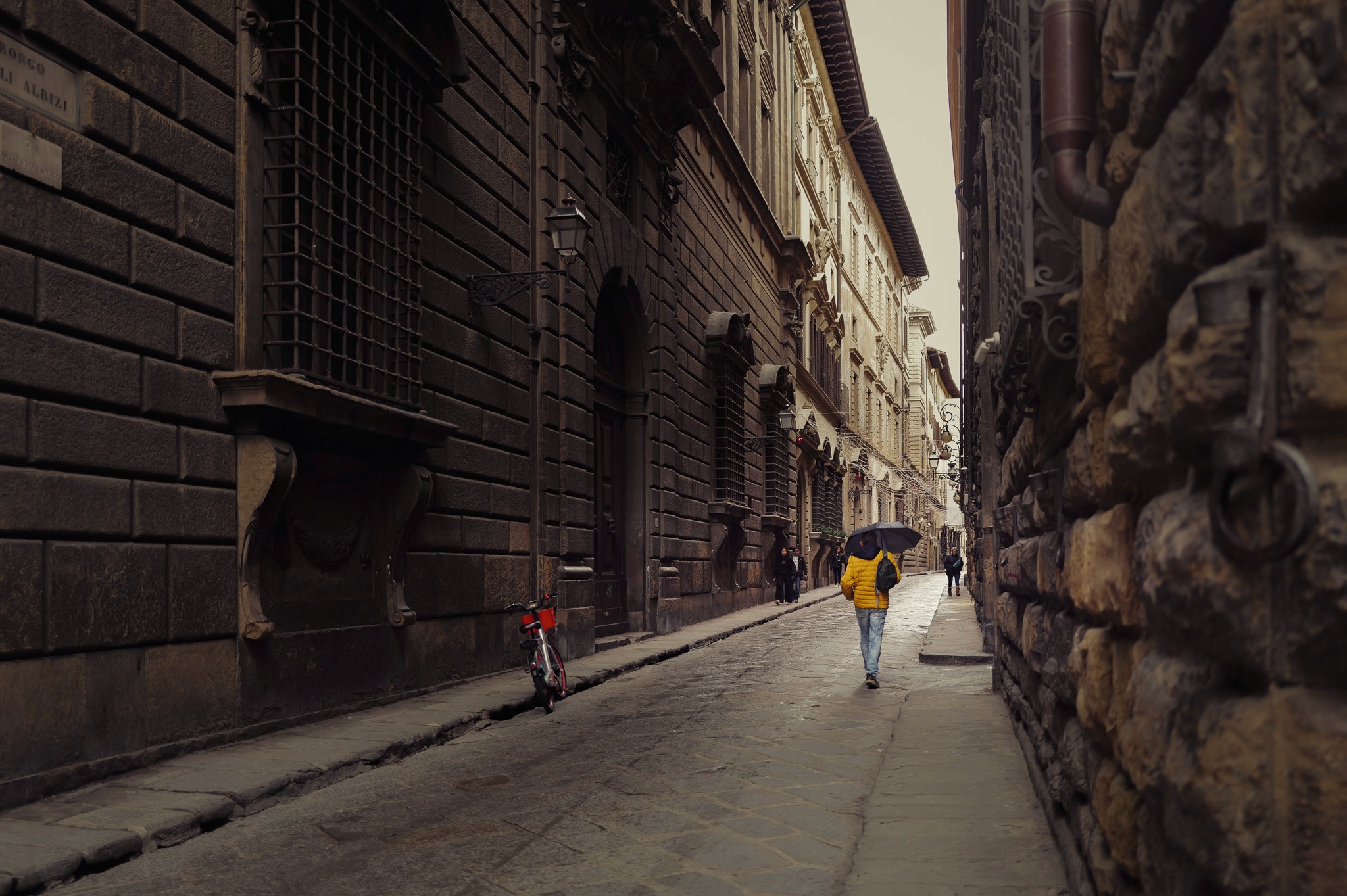
What draws me to a city like Florence isn't the monuments. It's the relationship between the permanent and the passing.
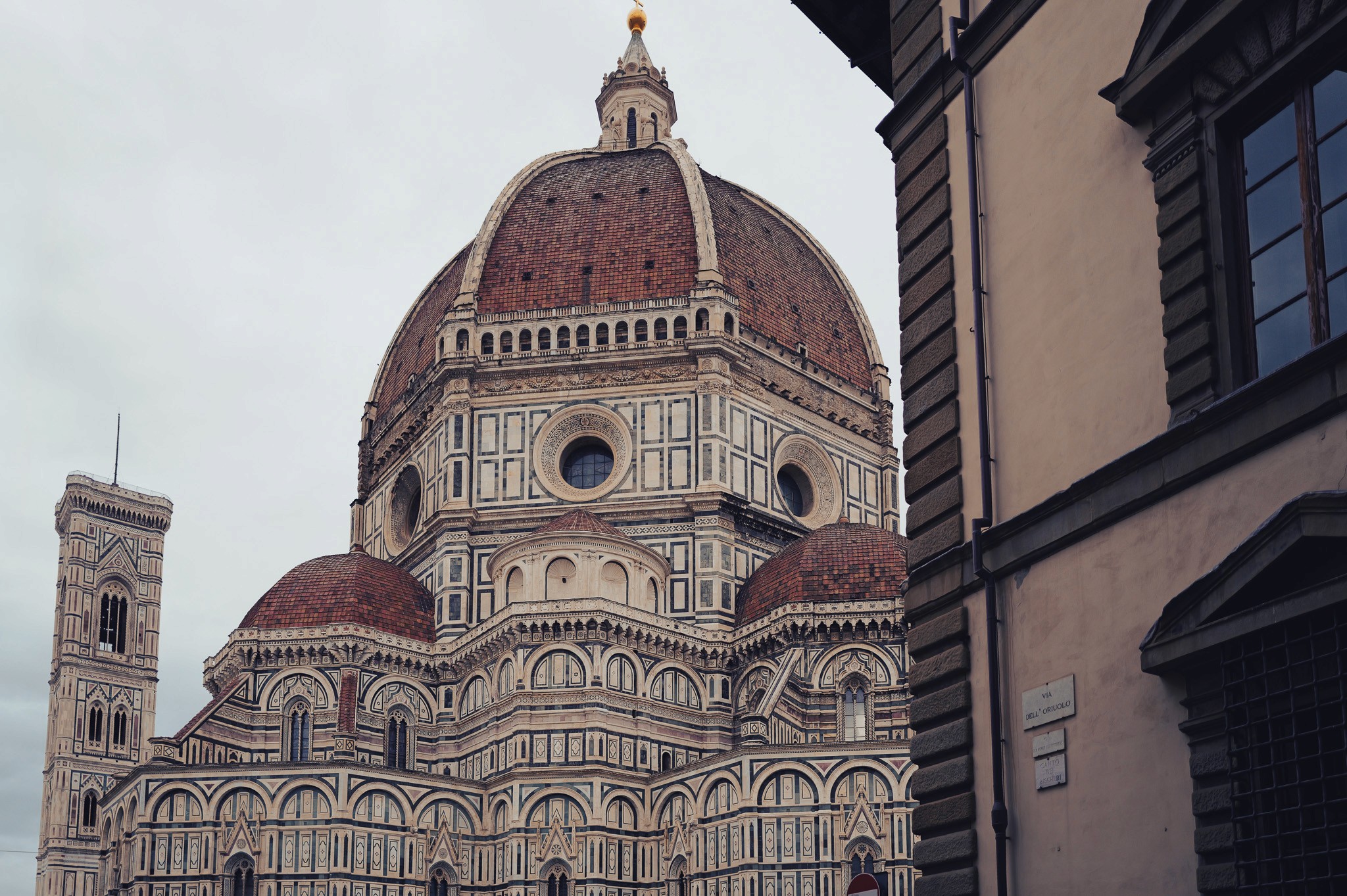
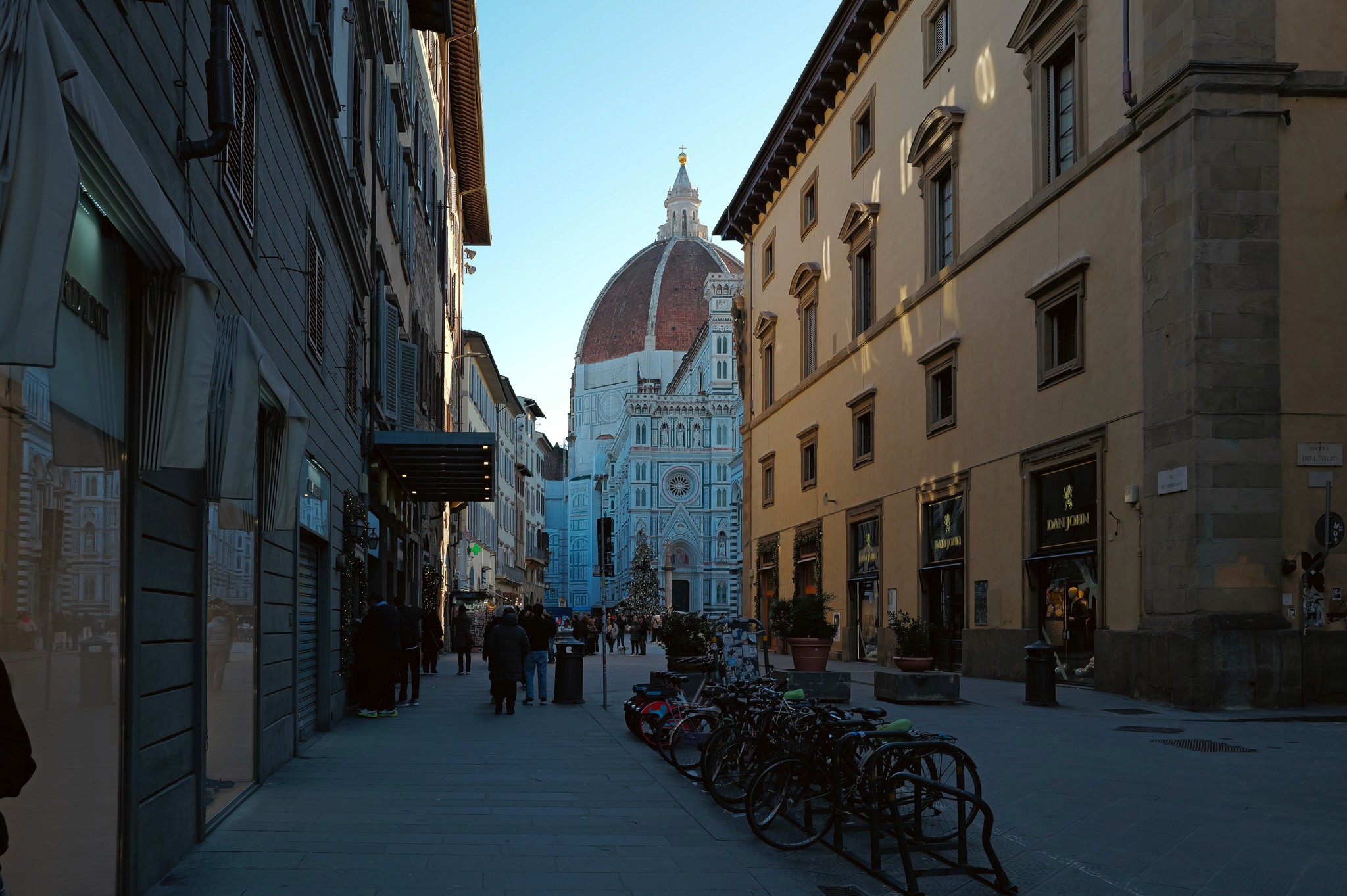
The Duomo has stood for six centuries. The figures clustered around its base, umbrellas tilted against the December drizzle, will be gone by the time the shutter has closed. In one frame: something that will outlast everyone alive today, and something that won't outlast the afternoon. The camera doesn't resolve that tension — it holds it, suspends it, makes it visible in a way that standing there in real time does not.
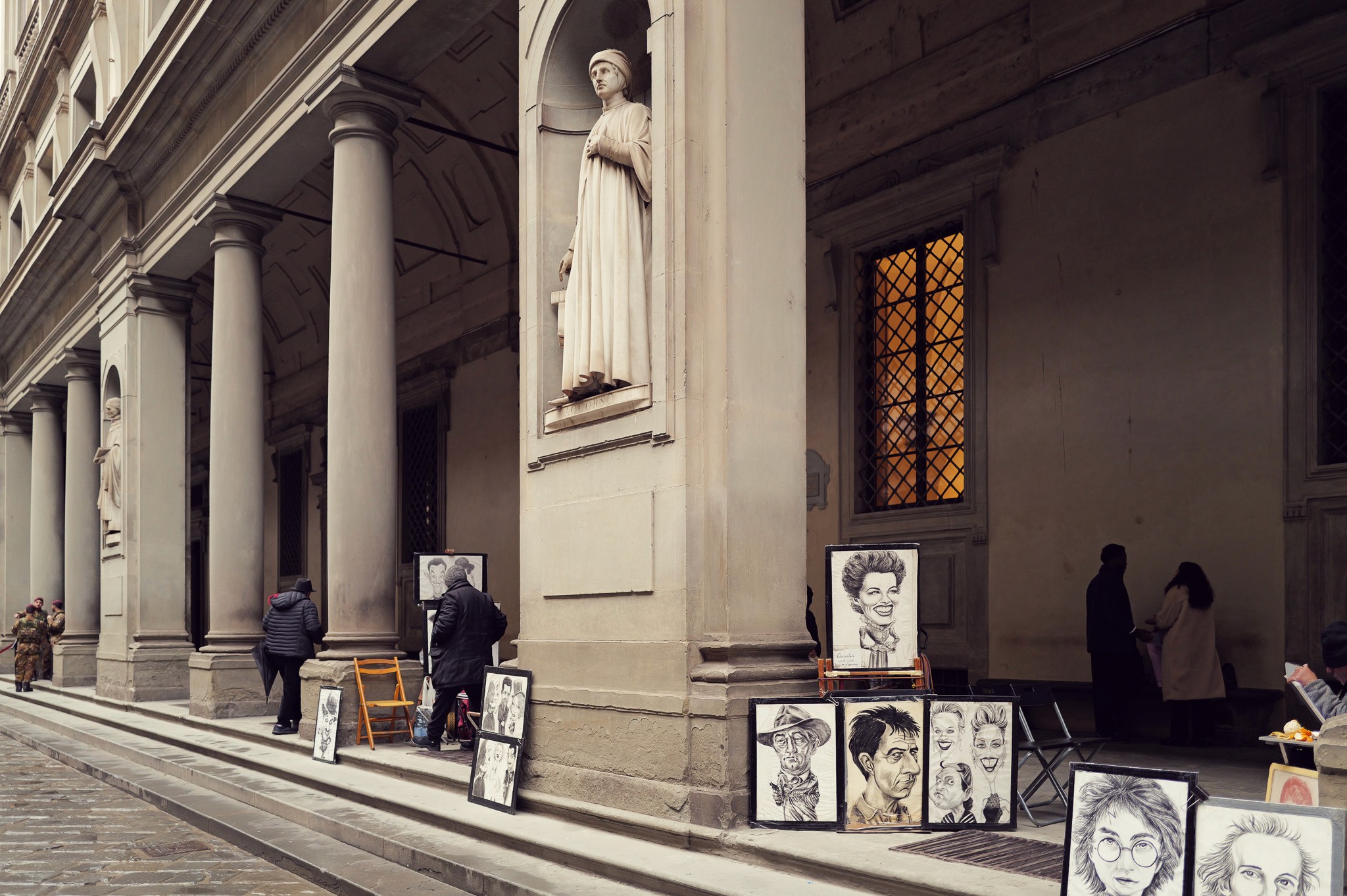
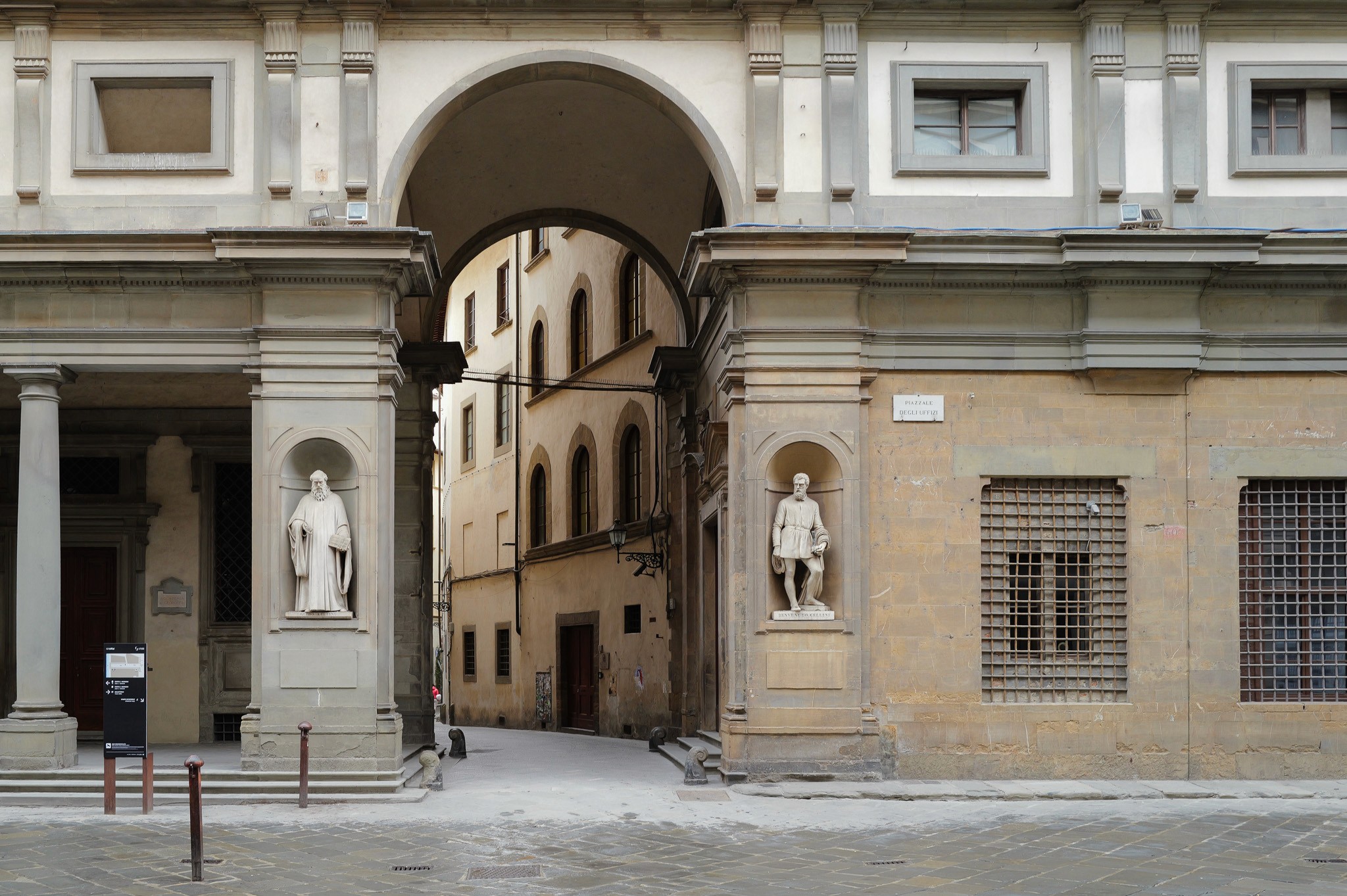
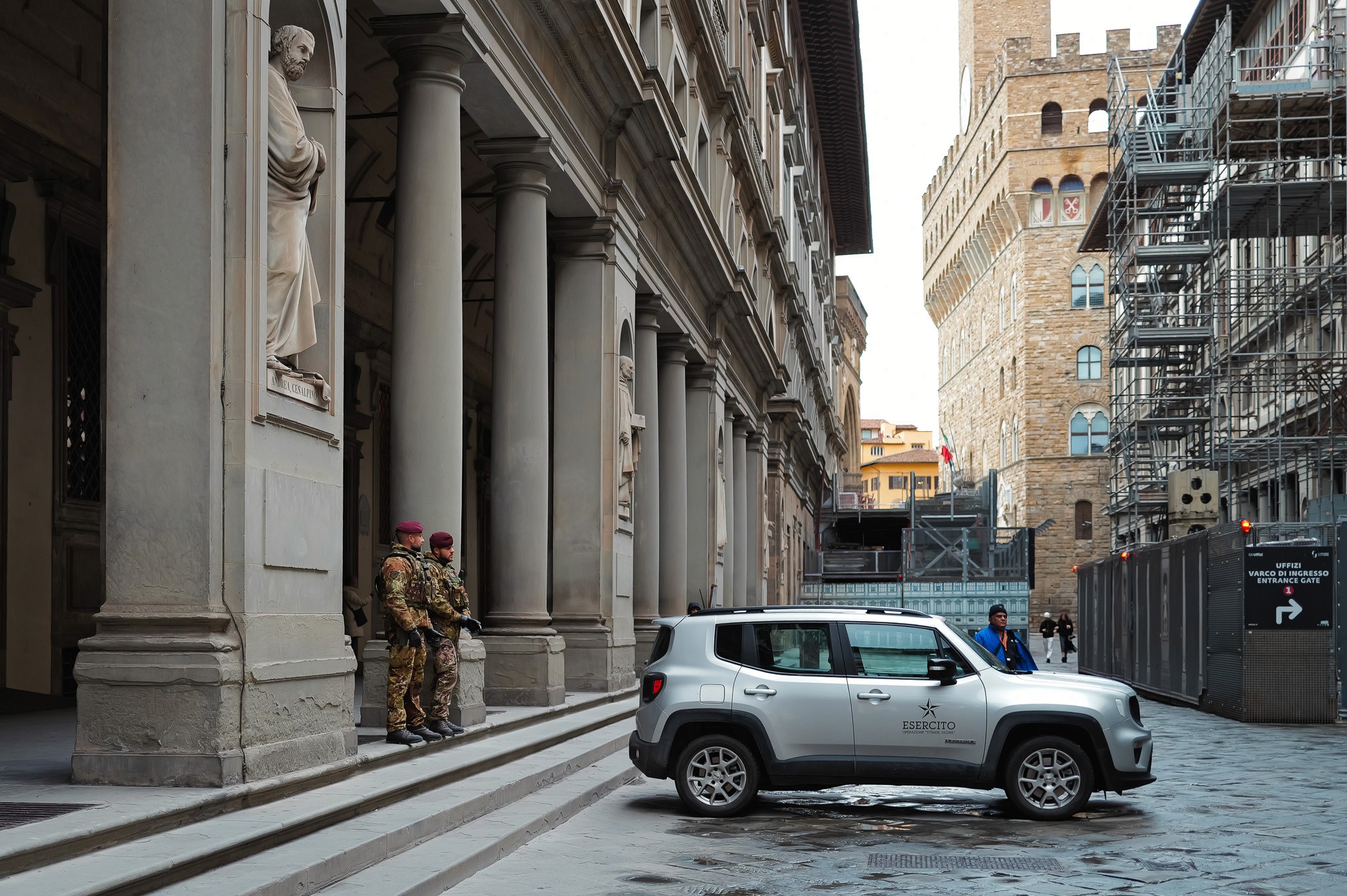
The Benvenuto Cellini statue watches from its niche in the Uffizi colonnade as a small group of pedestrians pass below. He has been watching pedestrians pass for a century and a half. He will watch for another century and a half after everyone reading this is gone. And yet the photograph is not about Cellini. It is about the pedestrians — specifically, about their complete indifference to him. The city and its inhabitants have reached an accommodation. The monuments stay; the living move through.
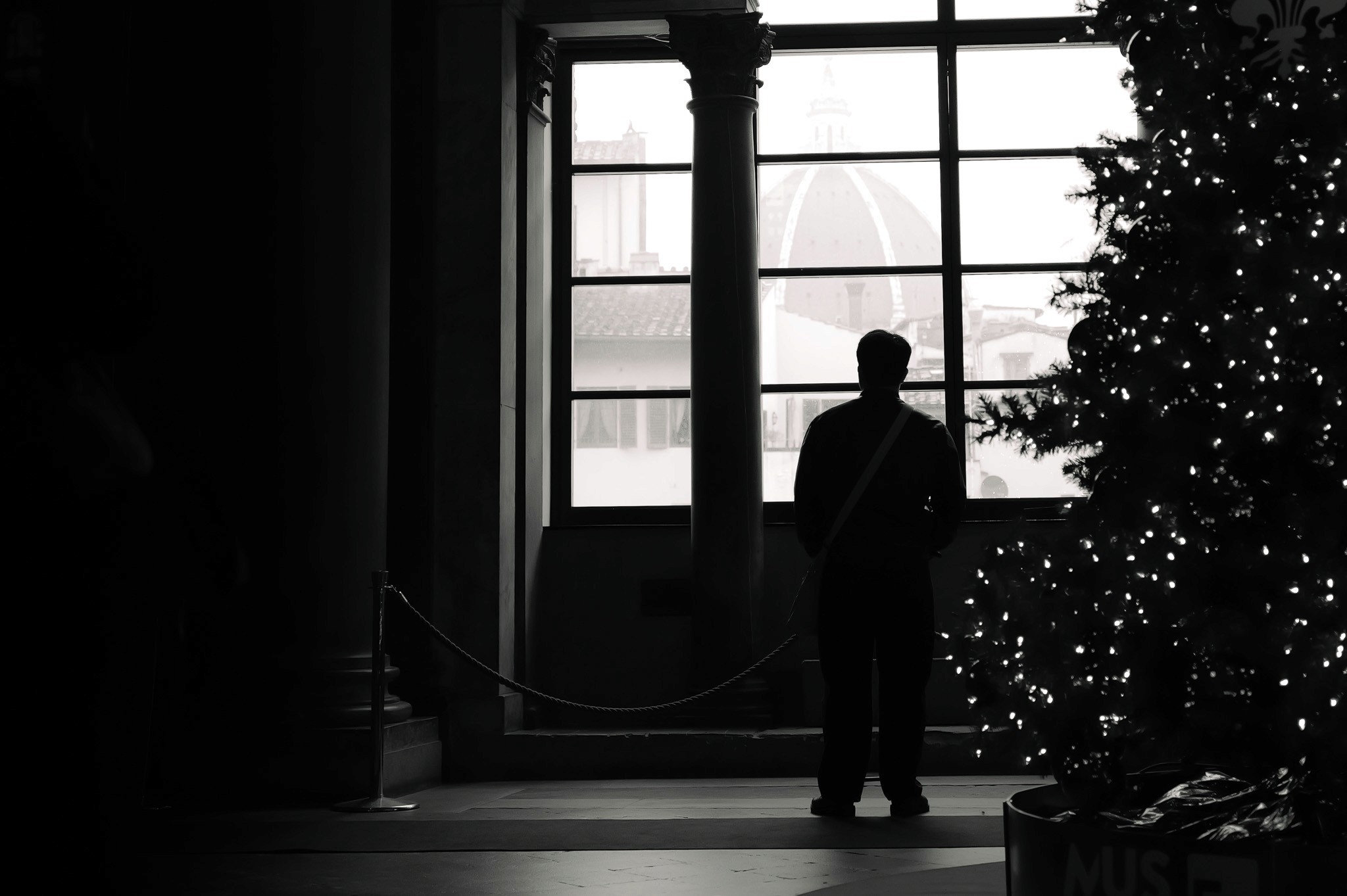
Inside one of the palaces — I won't name it; names collapse too quickly into tourism — I found the image that, for me, defines the whole journey. A single figure, backlit by a tall window, stands facing the glass. Outside: the Duomo, the grey winter sky, the city laid out in the middle distance. Inside: darkness, architectural columns, a Christmas tree whose lights are barely visible. The figure is in silhouette. You cannot tell if they are looking at the city with reverence, with boredom, with grief. The window holds everything: the view they came to see, the glass that separates them from it, and their own faint reflection standing in the way.
It is, I think, a photograph about the act of looking. Which is what I am always, underneath everything else, trying to make.
Florence did not give up its images easily. It resisted for most of the week. But the resistance is part of the work — it's what ensures that when something does open, when some arrangement of light and figure and stone offers itself without irony, you are ready for it. You have earned it, or something close to earning it.
I came back with fewer frames than expected, and more images than I hoped.