The Monastery at the Edge of the Sea - Mosteiro dos Jerónimos, Lisbon
December 2025
12 Minutes
There is a particular quality of silence that old stone holds. Not the silence of emptiness — but the silence of something that has absorbed too much to bother speaking anymore. You feel it the moment you step through the south portal of the Jerónimos Monastery, off a busy Lisbon street and into a different kind of time.
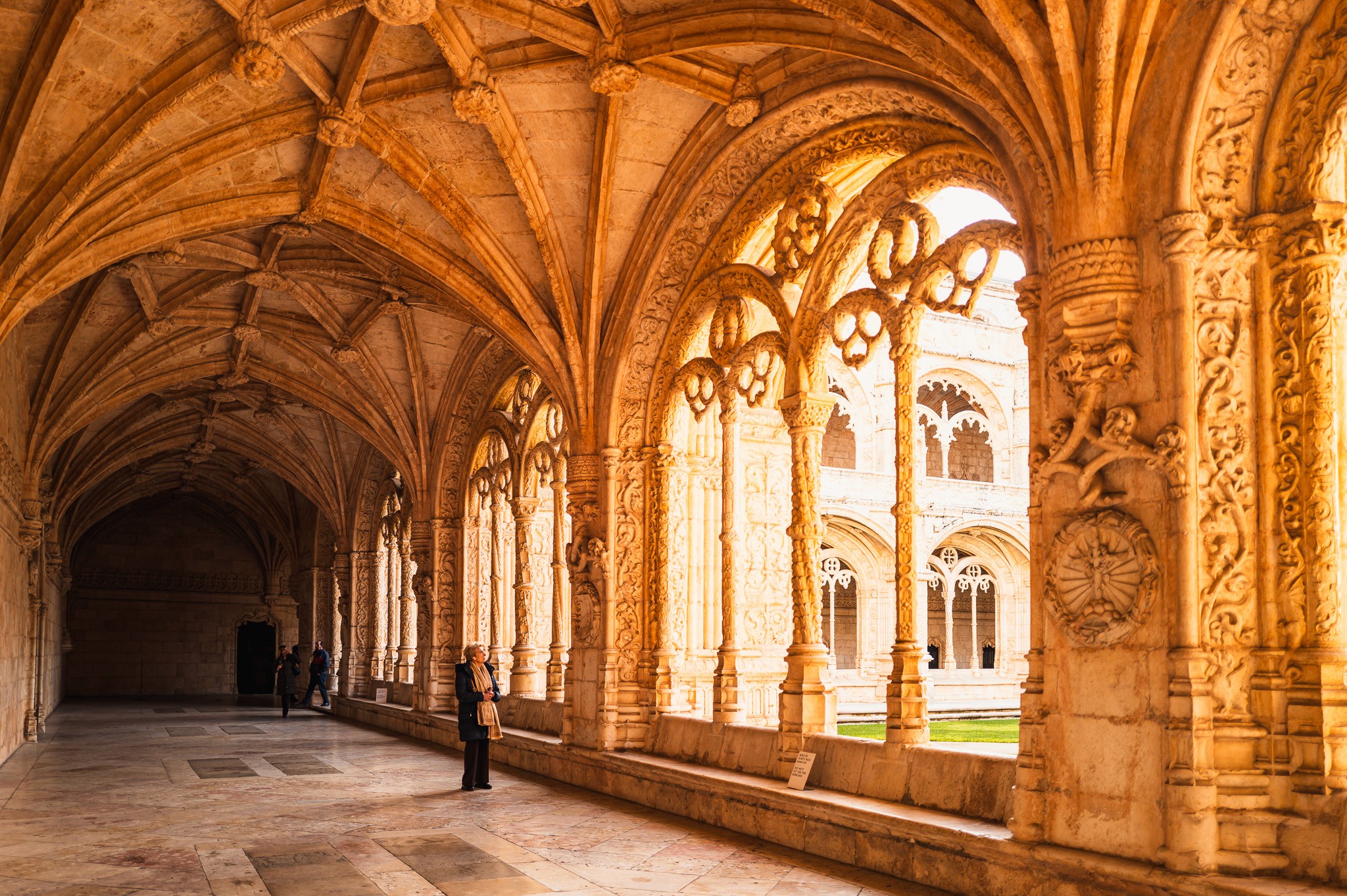
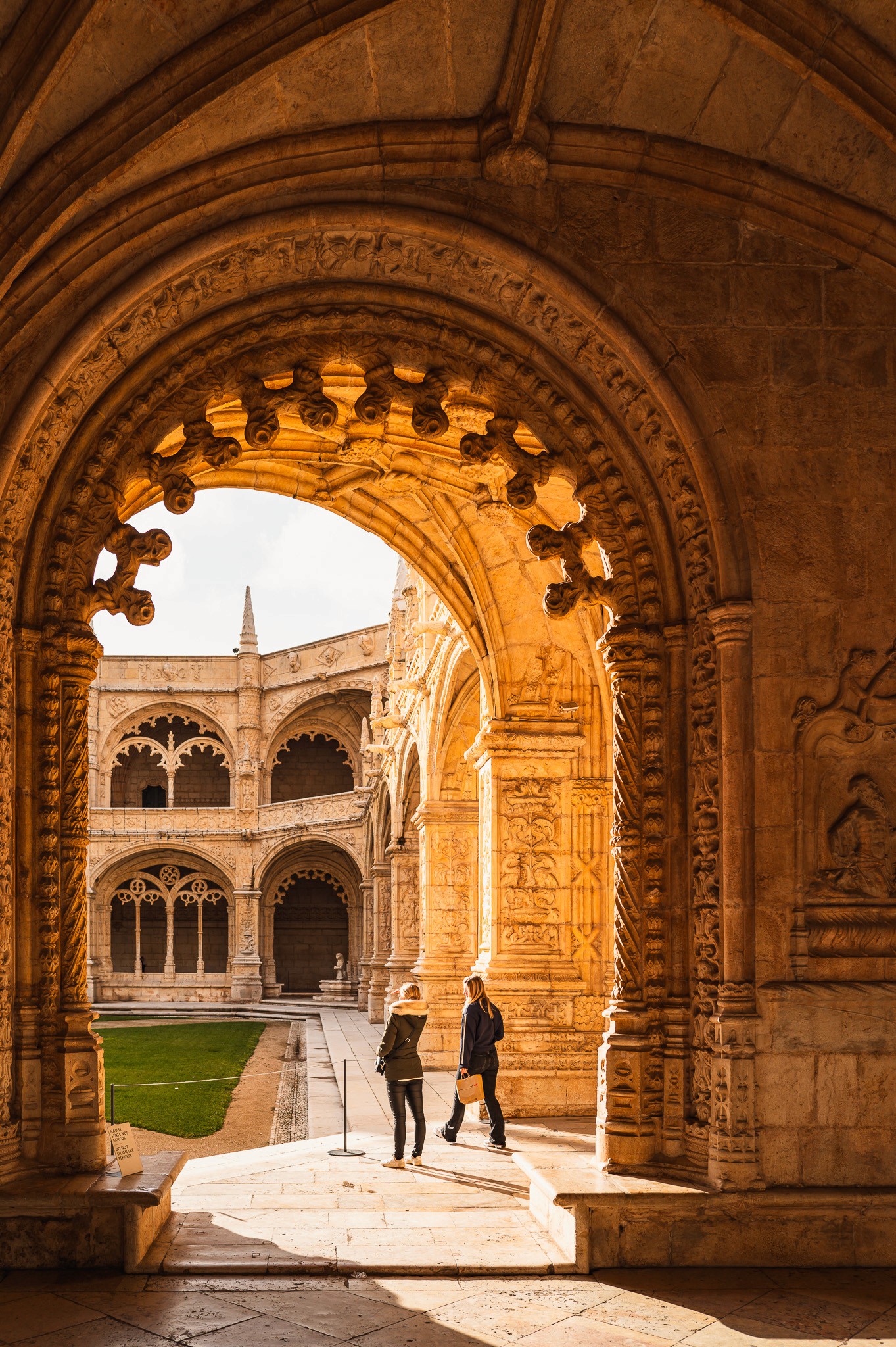
I arrived on a Tuesday morning in late winter, early enough that the tour groups hadn't yet thickened into crowds. The light was doing something extraordinary — coming through the filigree arches of the cloister at a low angle, casting shadow patterns across the limestone floor that moved almost imperceptibly as clouds passed outside. I stood there for a long time before I even thought to raise the camera.
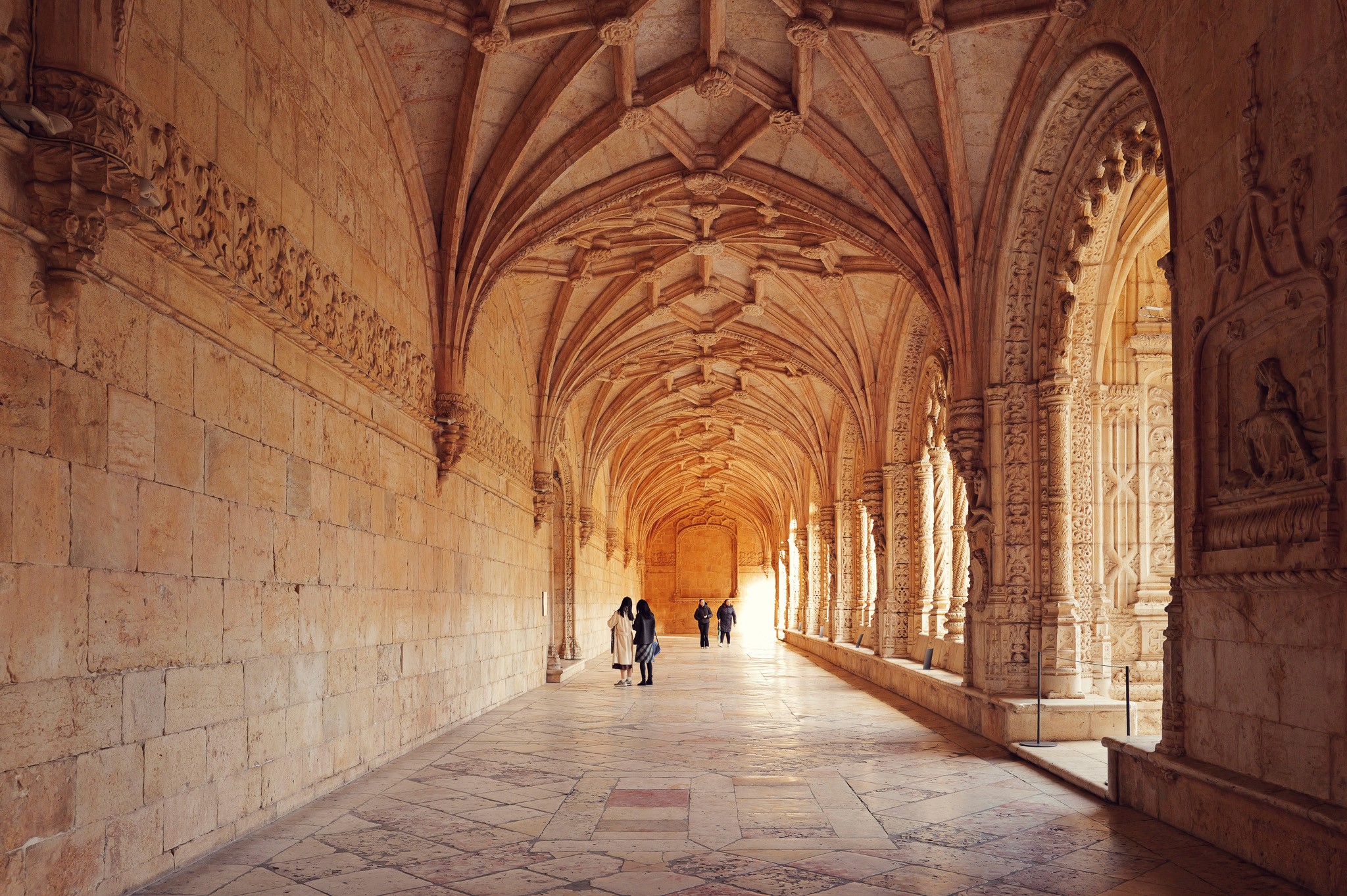
The nave of the church is the first thing that stops you. It doesn't announce itself — you walk through a low passage and then suddenly the ceiling is impossibly far above, fan vaulting spreading outward from clusters of octagonal columns the way frost spreads across a window. Manuel I ordered this built in 1501 to commemorate Vasco da Gama's return from India. The wealth of the spice trade paid for every carved rope, every stone armillary sphere.
But none of that history quite prepares you for being inside it. The scale is wrong in the best possible way — too vertical, too intricate, too committed to its own geometry to feel like it belongs to human hands. Standing beneath those vaults and tilting your head back, you have the sensation of looking into a nautilus shell from the outside.
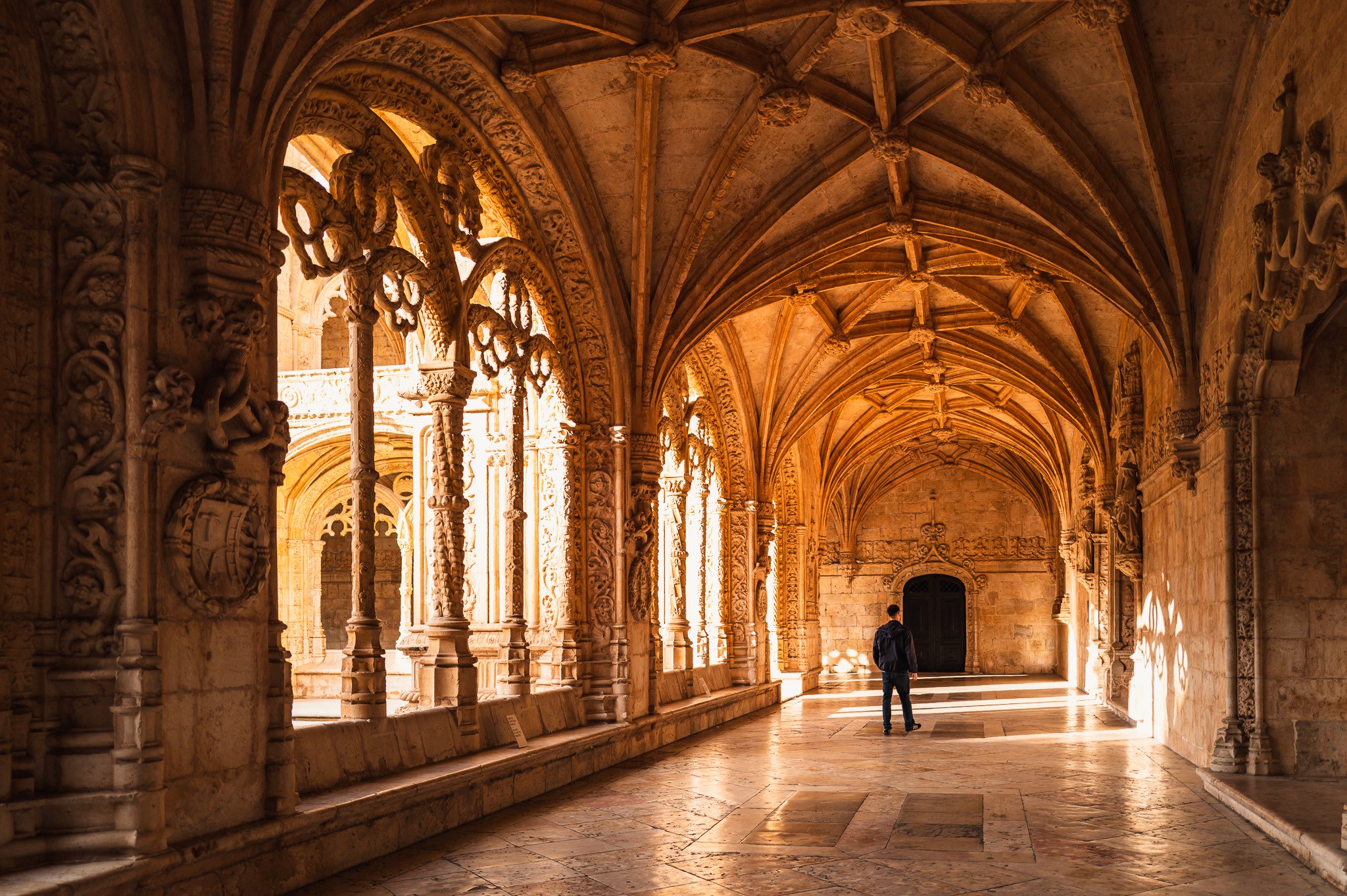
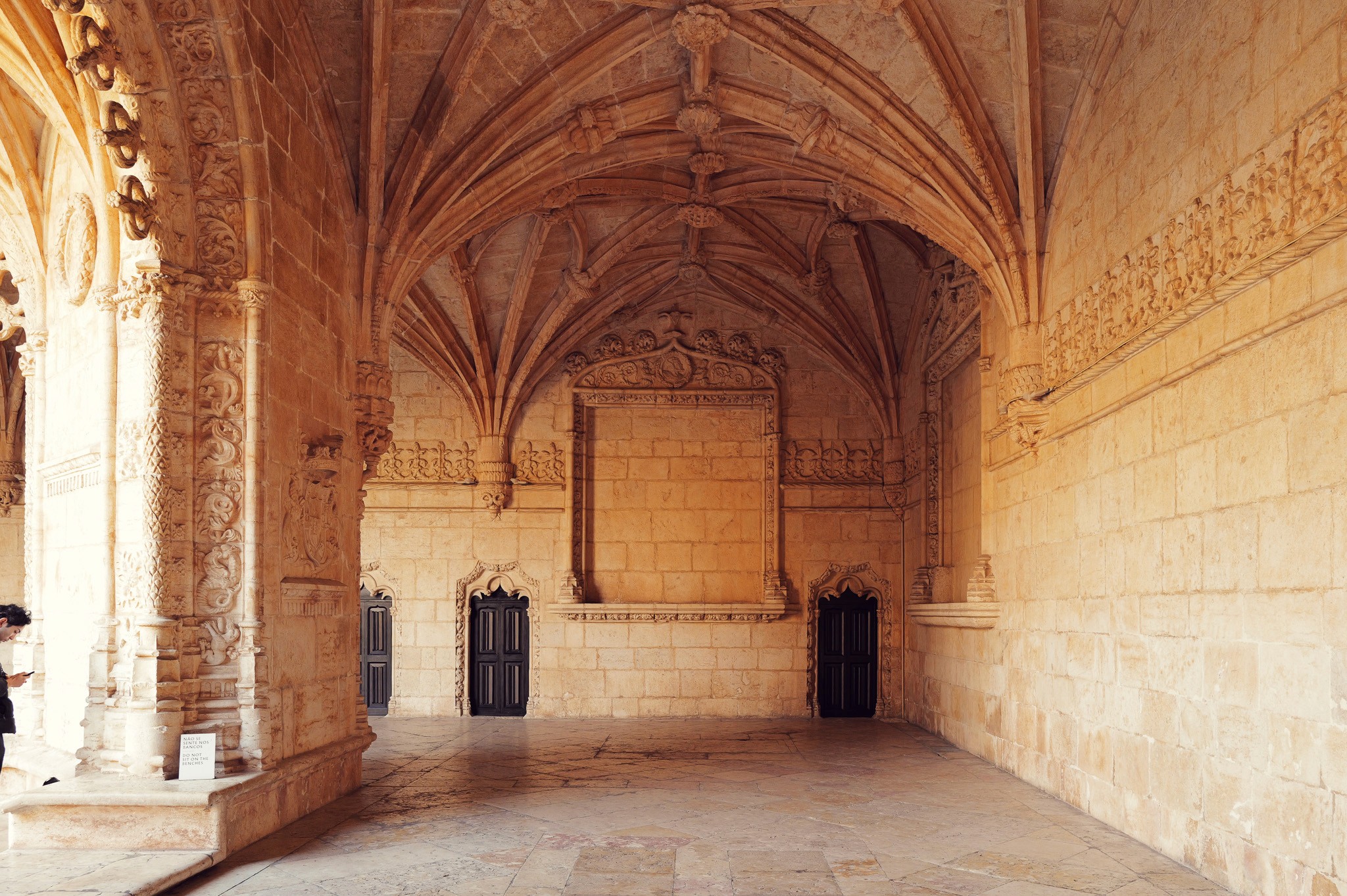
The cloister is where you slow down properly. Two storeys of arcaded galleries surround a garden court, each arch different from the last if you look closely enough — carved with coral, with sea creatures, with the twisted rope motif that appears throughout Manueline architecture, a reminder that this was a country built on open water. Everything here is the record of a civilisation that had just returned from the edge of the known world and needed somewhere to put that feeling.
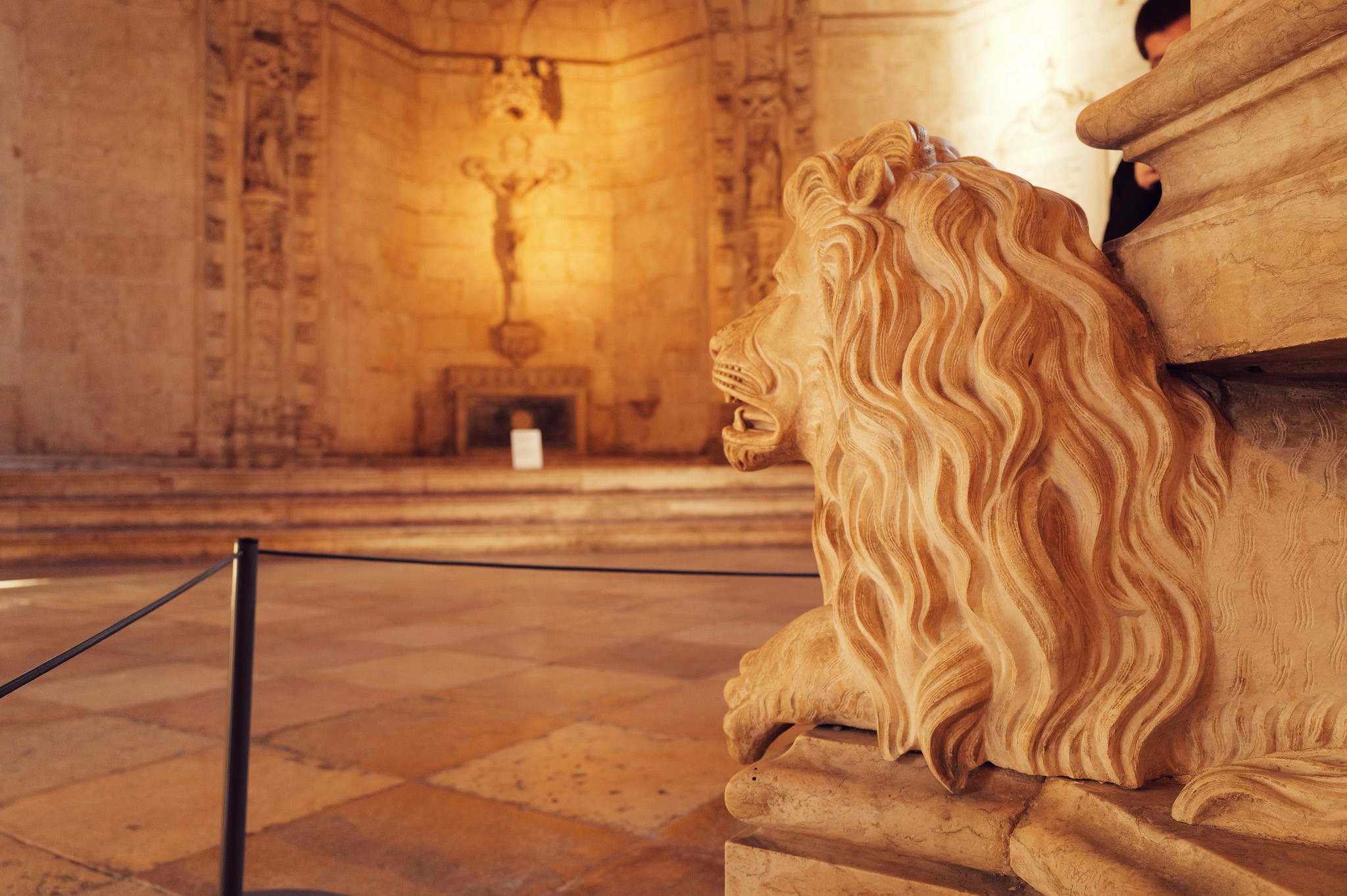
There is a panel of carved stone near one of the cloister doorways — a griffin, a shield, some heraldic device I couldn't identify. Someone spent months on this. Probably years, if you count everything that surrounds it. The monastery took a century to complete, and you sense the accumulated labour of it in details like this: not grand gestures but patient, repetitive, meditative carving that no single person would ever see in its entirety.
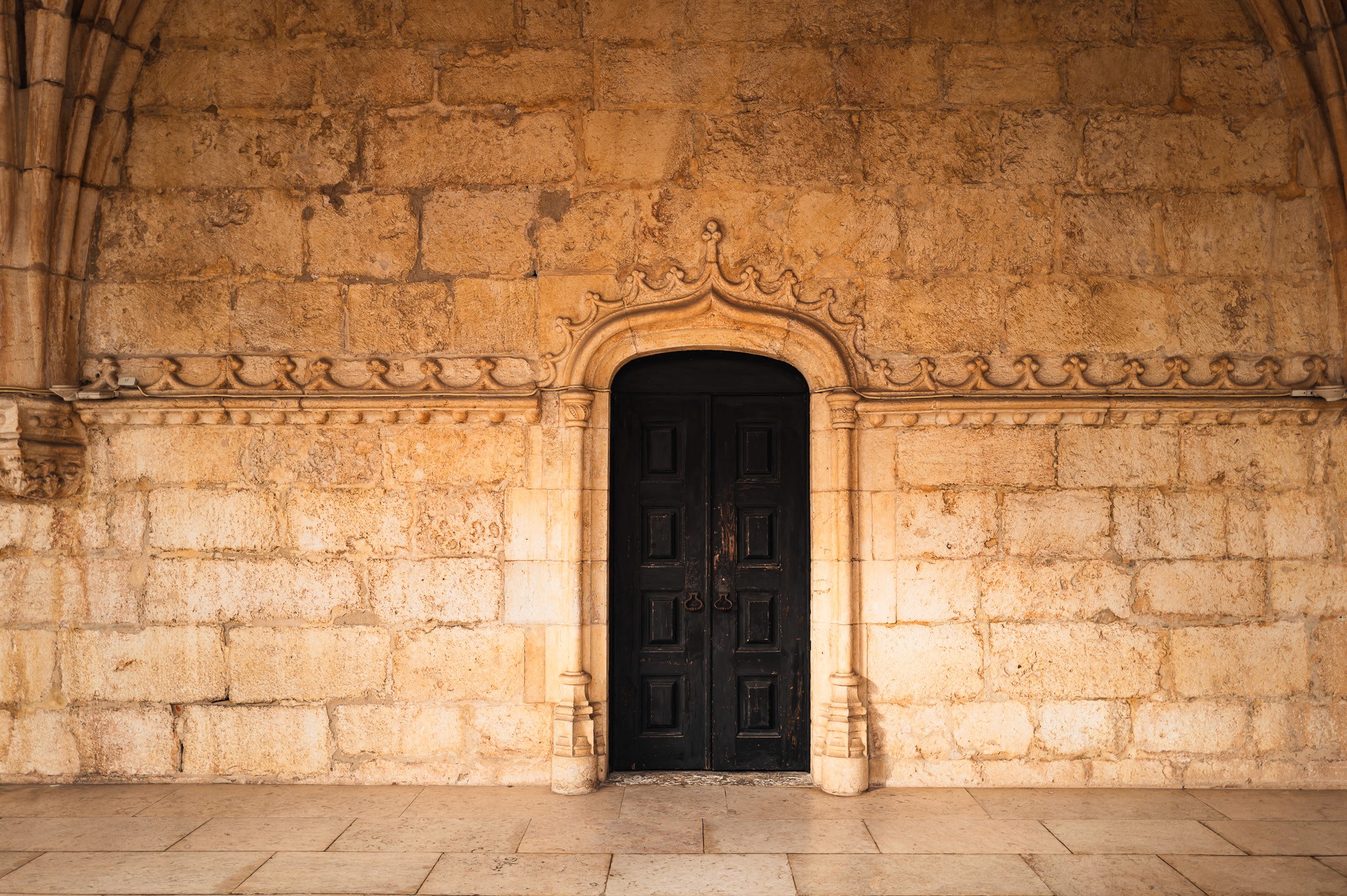
That's what keeps pulling your attention downward and inward, away from the obvious grandeur above. A twisted column base. A face worn almost smooth by five hundred years of passing hands. A threshold stone where the limestone has gone darker from foot traffic in a pattern that maps exactly where people have been pausing to look up, for centuries, at the same thing you're now looking at.
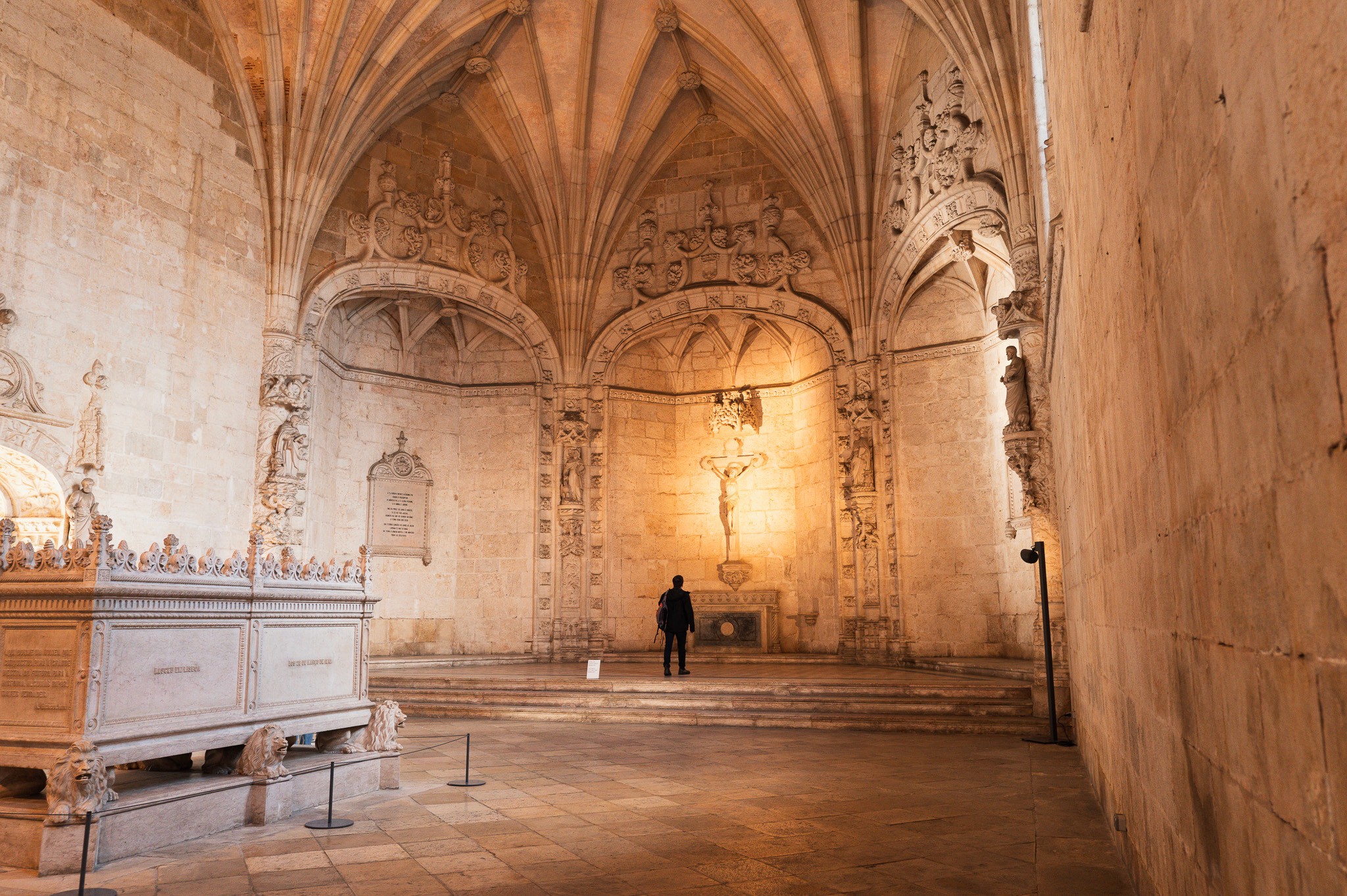
The tomb room held one figure in silhouette when I passed through — a person with a backpack, standing at the far end, facing the crucifix above the altar. The room was otherwise empty. The light behind the altar came from somewhere I couldn't see, warm and amber, catching the carved stone niches and throwing deep shadow behind the statues.
I took one photograph from the doorway and then put the camera down. Some things you just stand in front of.
By mid-morning the cloister had filled a little, but not oppressively so. There was still room to walk a full circuit without interruption, and the quality of light had changed — higher now, flatter, less dramatic but more revealing. The honey colour of the limestone came through more clearly. The whole building, on a day like this, takes on the warmth of something illuminated from within.
I spent a long time in one corner of the lower cloister where the shadow patterns from the arcade fell across the opposite wall in repeated arcs. The shadow shifted as I watched. A couple passed through, paused, looked at the same thing, kept walking. I took about forty frames. I'll keep three.
I left through the same south portal I'd entered, back onto the wide square with the Tagus visible beyond. The contrast was immediate and almost physical — the flat light, the open space, the noise of buses and voices. The monastery sat behind me, impassive.
These places don't follow you. They don't need to. You carry what you were paying attention to.